


Table of Contents
- What Separates High Quality Graphic Tees for Women From Fast Fashion
- The Best Fabric for Graphic T-Shirts: A Composition Breakdown
- How to Tell If a Graphic Tee Is Good Quality: Print and Construction Checks
- How to Wash Graphic Tees to Prevent Fading and Cracking
- Styling Graphic Tees for Women: Fits, Layers, and Everyday Looks
- Size Inclusivity and Fit: What to Check Before You Order
- Conclusion: Building a Wardrobe of High Quality Graphic Tees for Women
- Frequently Asked Questions
Last Updated: September 28, 2026
What Separates High Quality Graphic Tees for Women From Fast Fashion
A high quality graphic tee for women is a garment built from dense, durable fabric with a print that survives repeated washing, rather than a thin shirt with a design that cracks after three cycles. The difference shows up in the details: fabric weight, stitch density, ink type, and how the graphic is applied.
The Four Quality Signals to Check Before You Buy
Fabric weight and hand feel come first. A substantial cotton blend feels cool and dense, not thin or see-through against light. Hold the shirt up to a window; if you can read text through it, the fabric is too light for everyday wear.
The Best Fabric for Graphic T-Shirts: A Composition Breakdown
The best fabric for graphic t-shirts is a cotton blend with a small percentage of synthetic fiber for shape retention, typically combed cotton combined with a touch of polyester or elastane. But "cotton blend" is a broad label, and the difference between a $12 tee and a $45 tee often comes down to details the tag does not show: yarn type, fabric weight, and how the cotton was spun.
The Numbers Behind the Fabric
Three measurements separate a substantial tee from a disposable one:
- Fabric weight (GSM). Grams per square meter tells you how dense the knit is. A lightweight tee runs 120-140 GSM and is often semi-sheer. A midweight everyday tee sits around 150-180 GSM. A heavyweight tee is 200 GSM and up. Most high quality graphic tees for women land in the 160-200 GSM range.
- Yarn count. Finer yarns (higher count) feel smoother but can be less durable; coarser yarns feel more textured and resist pilling. Ring-spun cotton, which spins and thins the fibers repeatedly, produces a softer, stronger yarn than open-end cotton, which is faster and cheaper to make but rougher.
- Knit structure. Single jersey is the standard t-shirt knit. It stretches in one direction and is prone to curling at the edges. A tighter knit gauge means less show-through and a crisper print surface.
How the Common Compositions Compare
| Fabric | Feel | Print Longevity | Best For |
|---|---|---|---|
| 100% combed cotton | Soft, breathable | Good with screen printing | Everyday comfort |
| Cotton-poly blend | Smooth, holds shape | Excellent | Frequent washing |
| Tri-blend | Drapes well, vintage look | Good | Relaxed, retro styles |
| Slub cotton | Textured, lightweight | Moderate | Casual summer wear |
| Organic cotton | Soft, slightly matte | Good to excellent | Shoppers prioritizing sustainability |
| Modal or cotton-modal | Silky, cool to the touch | Good, but can pill | Drapey, elevated basics |
Cotton Blend vs. 100% Cotton: Which Holds Up Better
A cotton blend holds up better over time if you wash frequently, because the synthetic portion helps the shirt keep its shape and resist shrinking. Pure combed cotton wins on breathability and that classic broken-in feel, but it wrinkles more and can shrink if you dry it on high heat.
Why Organic Cotton and Modal Change the Equation
Organic cotton is grown without synthetic pesticides and is often processed with lower-impact dyes, which matters if ethical sourcing is part of your definition of "high quality." It behaves much like conventional combed cotton in the wash but tends to have a slightly matte finish.
Reading a Fabric Tag Like an Editor
When you are comparing two tees online, the composition line is the fastest filter. Look for a named cotton (combed, ring-spun, or organic) rather than just "cotton," a synthetic percentage between 5% and 35% for shape retention, and a stated fabric weight. If the listing mentions only "premium cotton" with no further detail, treat the quality claim as unverified until you can feel the fabric in person.
How to Tell If a Graphic Tee Is Good Quality: Print and Construction Checks
Print quality is checkable in seconds. Run your fingertip across the graphic. A quality screen print feels bonded to the fabric, almost like part of the shirt. A cheap transfer feels raised, plastic, and slightly tacky.
Then check the construction:
- Feel the inside of the shoulder seams for a taping strip that prevents stretching
- Check that side seams run straight, not twisted
- Look for a ribbed neckline that rebounds after you stretch it
- Confirm the hem is double-stitched, not a single raw edge
How to Wash Graphic Tees to Prevent Fading and Cracking
Washing graphic tees inside out in cold water and drying them on low heat or air-drying is the single most effective way to prevent fading and cracking. Heat is the enemy of both the ink and the cotton fibers. The American Cleaning Institute fabric care guidance recommends turning printed garments inside out before laundering to reduce abrasion against the print.
Why Prints Crack: The Mechanism
Heat accelerates the process in two ways. Hot water relaxes the cotton fibers and lets them move more under the ink. A hot dryer shrinks the fabric while the cured ink stays the same size, which is why the worst cracking usually appears after a high-heat dry cycle, not a wash.
How Long Should a Graphic Print Last?
There is no universal standard, but a useful benchmark: a well-made graphic tee, washed cold and air-dried, should hold its color and integrity through roughly 50 washes before noticeable fading.
A Simple Wash-Test You Can Run at Home
Before you commit a new tee to your regular rotation, run this test on a shirt you already own or on a low-stakes purchase:
- Wash it inside out in cold water with a small load.
- Dry it on low for 10 minutes, then hang to finish.
- Repeat five times.
- After the fifth cycle, stretch the graphic gently across the chest and check for hairline cracks along the fold lines.
The Routine That Actually Works
- Turn the tee inside out before it goes in the hamper
- Wash on cold with similar colors, never on hot
- Skip fabric softener, which leaves residue that dulls prints
- Tumble dry low for five minutes, then hang to finish
- Never iron directly over the graphic
Storage and Rotation
How you store a graphic tee matters less than how often you wear it. Rotating tees so each one rests between wears gives the cotton fibers time to recover their shape and reduces the cumulative strain on the print. Folding rather than hanging prevents shoulder-point stretching, and keeping tees out of direct sunlight preserves dye vibrancy over months of storage.
Styling Graphic Tees for Women: Fits, Layers, and Everyday Looks
Styling graphic tees for women comes down to balance: let the graphic be the loudest element, then keep everything else quiet. An oversized fit pairs well with slim bottoms, while a cropped silhouette balances high-waisted jeans or wide-leg trousers.
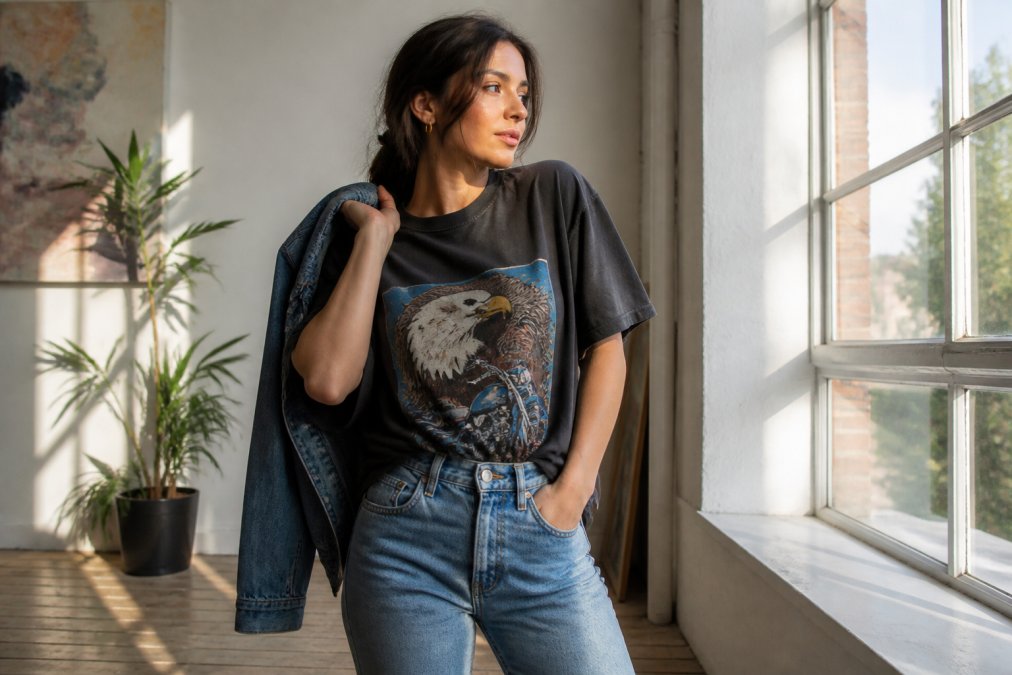
Oversized, Relaxed, and Baby Tee Silhouettes
Oversized fit means the shoulders drop past your natural shoulder line and the body is intentionally roomy. It works best with fitted bottoms and reads as streetwear aesthetic.
Size Inclusivity and Fit: What to Check Before You Order
Fit accuracy matters more with graphic tees than almost any other garment, because the print amplifies the cut. A graphic that sits wrong across the chest or rides up at the hem looks off no matter how good the design is.
Conclusion: Building a Wardrobe of High Quality Graphic Tees for Women
The challenge with building a wardrobe of high quality graphic tees for women is that quality is invisible until it fails. Thin fabric, loose stitching, and cheap transfers all look fine on a screen and fall apart in the wash.
Frequently Asked Questions
What fabric makes a graphic tee high quality?
Look for combed or ring-spun cotton, or a cotton blend with a small amount of polyester or elastane for shape retention. Combed cotton removes short fibers, which means a smoother surface and less pilling over time. A mid-weight fabric around 5 to 6 ounces per square yard holds its shape better than thin, sheer material.
How do you prevent graphic tee prints from cracking?
Turn the tee inside out before washing, use cold water on a gentle cycle, and skip the dryer. High heat is the main cause of cracked and peeling prints because it makes the ink layer expand and contract against the fabric. If you must dry, use the lowest setting. Wash graphic tees separately from items with zippers or hooks that can snag the print, and never iron directly over the design. A pressing cloth or ironing from the inside works if you need to smooth wrinkles.
Are cotton-blend graphic tees better than 100% cotton?
It depends on what you want. A cotton blend with a small percentage of polyester resists shrinking and holds its shape through repeated washing, which matters for a fitted or cropped silhouette. Pure cotton feels softer against the skin and breathes better in warm weather, but it can shrink and stretch over time. For a relaxed everyday tee, a blend of mostly cotton with a touch of synthetic fiber is often the more durable choice.
How should high quality graphic tees fit for a modern look?
Check the shoulder seam first. On a relaxed or oversized fit, the seam should sit slightly past your natural shoulder line without pulling. On a baby tee or cropped silhouette, it should land right at the shoulder. Sleeves should end mid-bicep for a classic cut or just above the elbow for an oversized one. The hem should hit at or just below the hip bone for a standard fit. If the fabric bunches at the armpits or pulls across the chest, size up.